


From Foundational Handbook to Strategic Field Manual: How Reader Feedback and an Evolving Threat Landscape Shaped the Most Comprehensive Cybersecurity Architecture Resource Yet
When the first edition of Cybersecurity Architect's Handbook: An End-to-End Guide to Implementing and Maintaining Robust Security Architecture hit shelves, the goal was ambitious but clear: provide a complete roadmap for cybersecurity professionals who wanted to think and operate as architects — not just practitioners running tools, but strategic thinkers designing resilient defenses for the modern enterprise. The response was overwhelming. Readers from around the world — aspiring architects, seasoned engineers, IT leaders, and career changers alike — embraced the book and made it an essential resource in the cybersecurity community.
But they also told me what they wanted more of.
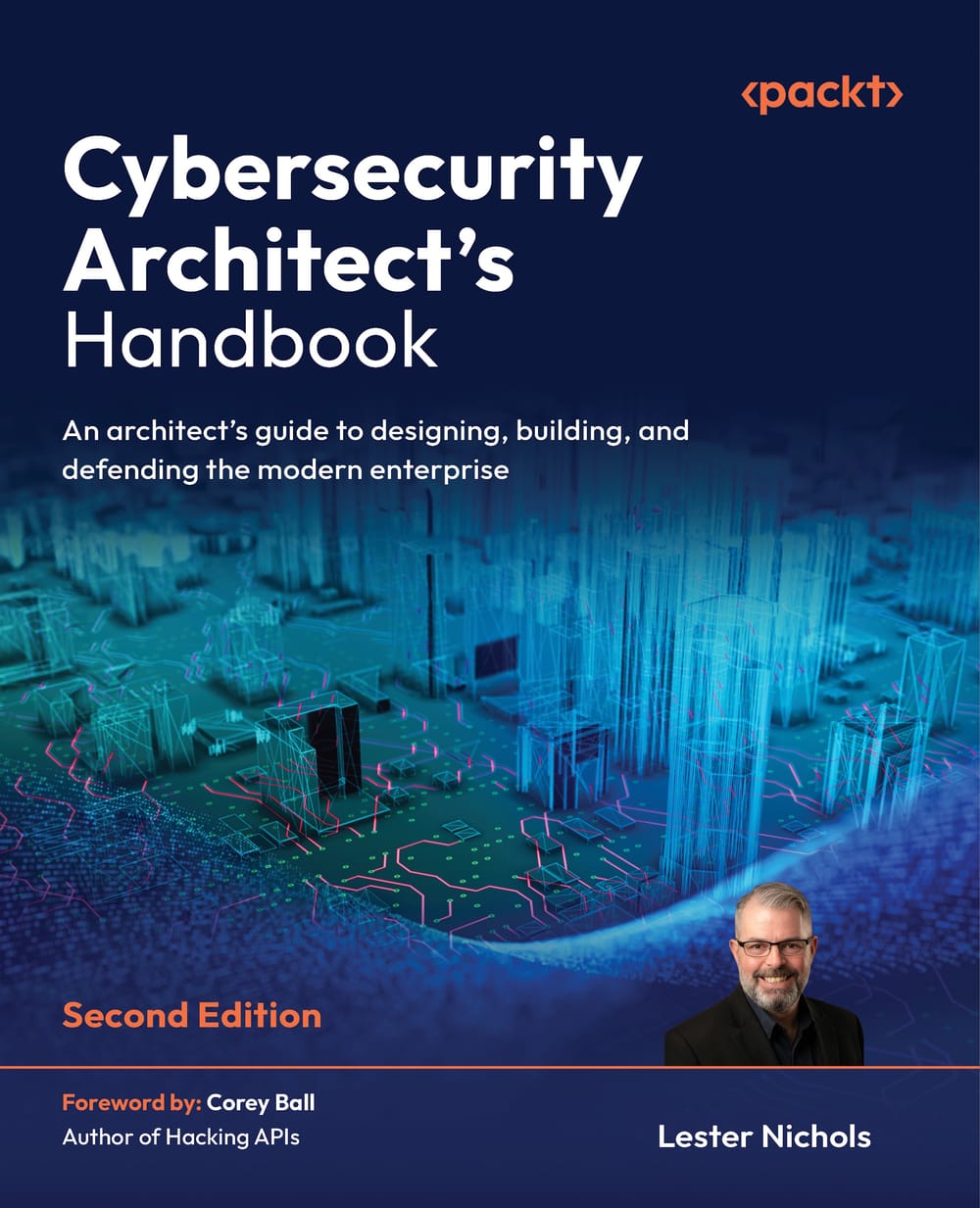
Today, I'm thrilled to announce that the Second Edition of the Cybersecurity Architect's Handbook: An Architect's Guide to Designing, Building, and Defending the Modern Enterprise is coming soon — and it's not just an update. It's a transformation. With a Foreword by Corey Ball, author of the acclaimed Hacking APIs, this edition has been rebuilt from the inside out to address the realities of today's threat landscape and the demands of tomorrow's cybersecurity architects.
You Asked. I Listened.
One of the most rewarding aspects of publishing the first edition was hearing directly from readers — through reviews, emails, and community forums. Several themes emerged consistently, and they became the blueprint for this second edition.
"Give us industry-specific guidance." Readers loved the foundational principles and architecture frameworks but wanted to see them applied to the unique regulatory, technical, and operational challenges of specific industries. A healthcare architect navigating HIPAA doesn't face the same constraints as an OT engineer securing a power grid, and both need more than generic advice.
"Go deeper on Zero Trust." Zero Trust was referenced in the first edition, but readers wanted a dedicated, practical treatment — not just the philosophy, but the actual implementation: identity-centric controls, micro-segmentation strategies, continuous verification mechanisms, and realistic migration paths for organizations that can't rip and replace overnight.
"Help us think strategically, not just technically." This was perhaps the most compelling feedback. Readers didn't just want to know what to build — they wanted frameworks for how to think about the problems they face. They wanted to operate as strategists, not just engineers with architecture titles.
"Cover AI — both as a tool and as a threat surface." The explosion of AI and machine learning in enterprise environments created an urgent gap that the first edition, written before the current AI revolution fully accelerated, simply couldn't have anticipated. Readers needed guidance on securing AI systems, mitigating adversarial AI threats, and architecting for a world where AI is both weapon and shield.
Every one of these requests shaped what the second edition has become.
What's New: From 14 Chapters to 20 — and a Whole New Philosophy
The first edition delivered a strong 14-chapter journey from cybersecurity fundamentals through architecture principles, documentation, career roadmaps, certifications, tool rationalization, and adaptability. Expanding the content took some consideration on what to include because of a 750-page constraint for all chapters within the 800-page max book length. The second edition preserves and updates all of that core content while expanding to 20 chapters with an entirely new section of applied, industry-specific architecture deep dives. This is almost double the original content and with an entirely new supplemental download!
New Chapters and Content
Zero Trust Architecture Implementation — This isn't another high-level overview of Zero Trust buzzwords. This chapter delivers practical, implementable guidance covering identity-centric controls, micro-segmentation, continuous verification, and step-by-step migration strategies for organizations transitioning from traditional perimeter-based models. Scenario-based exercises walk you through real-world Zero Trust design decisions.
AI Security Architecture — From securing machine learning pipelines to mitigating adversarial AI attacks, this chapter addresses the architecture challenges that didn't exist at scale when the first edition was written. You'll learn to design security architectures for AI systems that account for data poisoning, model theft, prompt injection, and the unique governance requirements that AI introduces to the enterprise.
Financial Services Security Architecture — A dedicated deep dive into architecting for PCI-DSS, GLBA, SOX, and the layered regulatory environment that makes financial services one of the most demanding domains in cybersecurity. Complete with compliance mapping, architecture patterns, and scenario-based design exercises.
Healthcare Security Architecture — HIPAA, HITECH, and the unique operational realities of healthcare environments — where system availability can be a matter of life and death — demand specialized architectural thinking. This chapter provides the frameworks and patterns to navigate that complexity.
Cloud-Native Security Architecture — Kubernetes security, serverless architecture patterns, DevSecOps integration, container security, and the architectural decisions that distinguish a secure cloud-native environment from one that merely runs in the cloud. This chapter meets the reality that cloud-native is no longer emerging — it's the default.
Critical Infrastructure Protection — ICS/SCADA security, IT/OT convergence, and the architectural patterns required to defend the systems that underpin our physical world. This chapter addresses the growing recognition that critical infrastructure is simultaneously the most important and most vulnerable domain in cybersecurity.
Updated and Enhanced
Tool Rationalization and Selection — The first edition's guidance on choosing tools resonated with readers, but the landscape has shifted. This updated chapter reflects the current commercial and open-source ecosystem, with refreshed guidance on decluttering bloated toolsets and aligning tool selection with business objectives rather than vendor hype.
Architecture Challenges and Adaptability — Updated to address the evolving threat landscape, including quantum computing readiness, AI-driven attack vectors, and the organizational governance challenges that have intensified as security has become a board-level concern.
Hands-On Labs and Scenario-Based Exercises — Expanded supplemental download with lab and additional content for tools, including new labs for Zero Trust implementation, cloud-native security configuration, and AI threat modeling. The first edition's scenario-based approach was one of its most praised features, and the second edition doubles down on it.
Certification Landscape and Career Pathways — Updated to reflect the current certification ecosystem and career market, with strategic guidance on choosing certifications that align with your career direction — whether you're entering the field, transitioning from engineering, or advancing to a senior architect role.
The Strategic Thread: Sun Tzu Meets Cybersecurity
Perhaps the most distinctive addition to the second edition is a strategic framework inspired by Sun Tzu's The Art of War, woven throughout every chapter. Similar to the previous edition, this isn't a gimmick or a loose metaphor. It's a deliberate philosophical thread that reinforces a truth many readers of the first edition already sensed: cybersecurity architects are not merely technicians. They are strategists and tacticians operating on a digital battlefield.
The same universal principles of preparation, adaptation, deception, terrain awareness, and strategic thinking that have governed conflict for millennia now govern the defense of modern digital infrastructure. This framework connects foundational concepts like the CIA triad and access controls through advanced topics including adversarial AI mitigation, compliance architecture, container security, ICS/OT convergence, and Zero Trust migration. It provides a unifying lens that elevates every technical decision into a strategic one.
The goal is to equip you not just with the skills to design and build — but with the mindset to defend. To think several moves ahead. To understand your adversary. To position yourself as a leader, not just a practitioner.
A Foreword by Corey Ball
I'm honored that Corey Ball, author of Hacking APIs: Breaking Web Application Programming Interfaces, has written the Foreword for this second edition. Corey's work on API security has been instrumental in shaping how the industry thinks about one of the most critical and often overlooked attack surfaces in modern architecture. His perspective on the intersection of offensive security knowledge and defensive architectural thinking sets the perfect tone for what this book aims to accomplish.
Who This Book Is For
The second edition is written for cybersecurity professionals at any stage of their career who want to develop the strategic thinking, architectural judgment, and adaptable skill set needed to thrive as a cybersecurity architect — regardless of the specific tools, technologies, or environments they encounter.
Rather than prescribing rigid, one-size-fits-all solutions, this book teaches you how to think — how to evaluate, reason through, and architect security for any situation. Specifically, it's designed for:
- Aspiring cybersecurity architects transitioning from entry-level, engineering, development, or IT operations roles who need both the foundational knowledge and a clear roadmap for how to think and operate as an architect
- Practicing security professionals seeking to elevate from tactical, tool-specific execution to strategic architectural thinking — learning not just what to implement, but how to evaluate trade-offs, balance competing priorities, and make defensible design decisions
- Current architects who want to expand their domain expertise across emerging areas such as AI security, cloud-native architecture, critical infrastructure protection, and Zero Trust, while strengthening transferable frameworks they can adapt to any context
- Technology leaders and IT managers responsible for security strategy who need to understand how cybersecurity architecture integrates with business objectives, governance, and risk management
Because every organization, threat landscape, and technology environment is different, this book prioritizes teaching you how to think over telling you what to do.
The Road Ahead
The second edition of the Cybersecurity Architect's Handbook represents everything I've learned from writing the first edition, listening to readers, and watching the cybersecurity landscape evolve at an unprecedented pace. It's bigger — 20 chapters instead of 14. It's deeper — with industry-specific architecture guidance that didn't exist in the first edition. It's more practical — with expanded hands-on labs and scenario-based exercises throughout. And it's more strategic — with a philosophical framework that elevates the role of the cybersecurity architect from technician to tactician.
The war in cyberspace doesn't pause for second editions. But with the right preparation, the right frameworks, and the right mindset, you can architect defenses that are ready for whatever comes next.
Stay tuned for release details. The second edition is coming — and it's bringing reinforcements.


